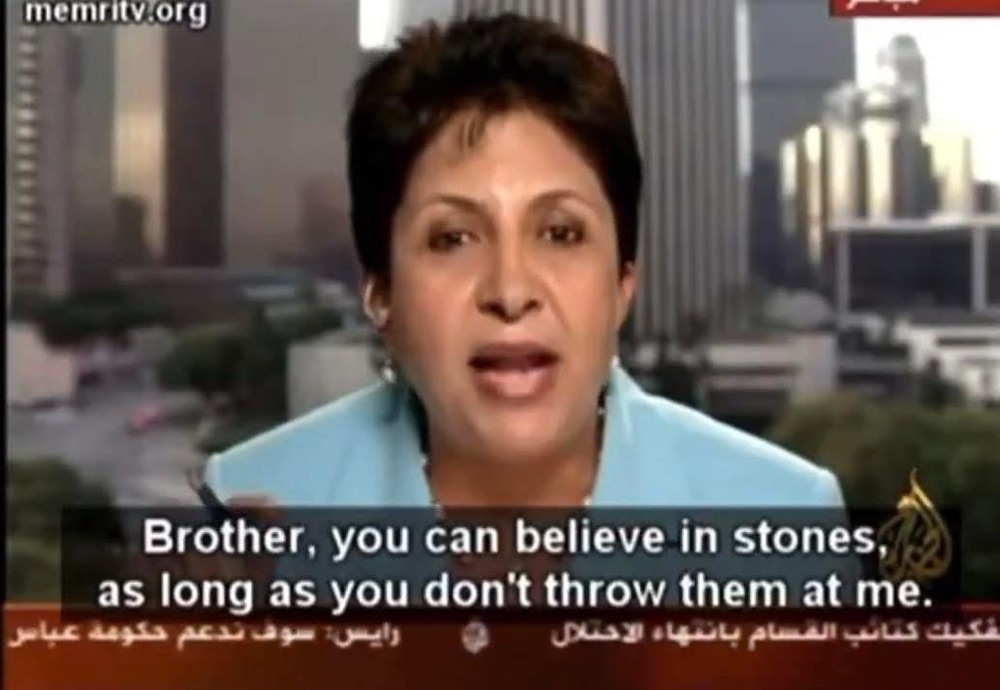
Gruaja arabe që guxoi të thoshte atë që shumë e mendonin, por askush nuk e thoshte — në Al Jazeera.
Në vitin 2006, Wafa Sultan doli para miliona shikuesve dhe theu një heshtje të rëndë. Jo si politikane, jo si përfaqësuese e Perëndimit, por si një grua arabe, e rritur në një familje myslimane, që vendosi të flasë hapur — në gjuhën e saj dhe për botën e saj.
Ajo nuk bërtiti, nuk ofendoi. Tha diçka të thjeshtë, por tronditëse:
“Vëlla, beso çfarë të duash — edhe në gurë — për sa kohë që nuk i hedh mbi mua. Besimi yt është i yti, jo imi.”
Një fjali e vetme që ndan lirinë nga dhuna.
Më pas erdhi krahasimi që përplasi ndërgjegjet:
Dhe pastaj ajo tha atë që shumë nuk guxojnë as ta mendojnë me zë:
Një heshtje e rëndë ra në studio.
Ajo vazhdoi:
Mesazhi i saj ishte i prerë dhe i pakompromis:
“Myslimanët duhet së pari të pyesin veten: çfarë po i japim njerëzimit?”
Sepse respekti nuk kërkohet, ai fitohet.
Dhe çmimi që ajo pagoi ishte i rëndë: kërcënime me vdekje, izolim dhe përndjekje. Sepse e vërteta, kur dhemb, shpesh urrehet më shumë se gënjeshtra.
Por disa të vërteta nuk heshten.
Mos u bë pre e propagandës. Mos u dorëzo para fanatizmit. Mos e ngatërro besimin me urrejtjen.
Feja është një marrëdhënie personale. Kur përdoret për të frikësuar, për të imponuar apo për të ndarë, ajo pushon së qeni fe dhe kthehet në armë.
Dhe armët nuk ndërtojnë shoqëri — ato i shkatërrojnë.
Hape sytë. Mendo vetë. Mos lejo askënd të të radikalizojë në emër të diçkaje që duhet të mbetet personale.
Sepse Zoti nuk ka nevojë për dhunë për t’u mbrojtur.
Disa të vërteta nuk vjetërohen.
The Arab woman who dared to say what many thought, but no one dared to speak — on Al Jazeera.

In 2006, Wafa Sultan stood before millions of viewers and broke a heavy silence. Not as a politician, not as a representative of the West, but as an Arab woman, raised in a Muslim family, who decided to speak openly — in her own language, for her own world.

She did not shout. She did not offend. She said something simple, yet shocking:

“Brother, believe whatever you wish — even in stone — as long as you do not throw it at me. Your faith is yours, not mine.”

A single sentence that draws the line between freedom and violence.

Then came the comparison that shook consciences:

The Jews emerged from the Holocaust — one of humanity’s greatest tragedies — and they did not seek revenge against the world. They built, they learned, they worked, they achieved. Respect was earned not through fear, but through value.

And then she said what many dare not even think aloud:

“We have not seen Jews blow themselves up in restaurants. We have not seen Jews destroy churches. We have not seen protests turn into murder.”

A heavy silence fell over the studio.

She continued:

When the Taliban destroyed the Buddha statues in Bamiyan, the Buddhist world did not respond with violence — no fire, no blood, no revenge. True strength does not need to destroy.

Her message was clear and uncompromising:

“Muslims must first ask themselves: what are we giving to humanity?”

Respect is not demanded; it is earned.

And the price she paid was high: death threats, isolation, persecution. Because truth — when it hurts — is often hated more than lies.

But some truths do not remain silent.

Do not fall prey to propaganda.
Do not surrender to fanaticism.
Do not confuse faith with hatred.

Faith is a personal relationship. When used to intimidate, to impose, or to divide, it ceases to be faith — it becomes a weapon.

And weapons do not build societies — they destroy them.

Albanians have survived because they knew how to maintain this clear line: faith is personal, while the nation is shared. This is not weakness; it is strength.

Open your eyes.
Think for yourself.
Do not let anyone radicalize you in the name of something that must remain personal.

For God does not need violence to be defended.

Some truths do not age.
 AL in Sweden.