ASSESSMENT OF U.S. DESIGNATION POLICY REGARDING FORMER ALBANIAN PRIME MINISTER SALI BERISHA:
IMPLICATIONS FOR BILATERAL RELATIONS AND REGIONAL STRATEGIC OBJECTIVES
Prepared by Continental Strategy and Continental PLLC
July 22, 2025
EXECUTIVE SUMMARY
The 7031(c) designation of former Albanian President and Prime Minister Sali Berisha should be lifted immediately. The designation was politically motivated, lacks factual basis, damaged U.S. foreign policy interests, and contributed to Albania’s deterioration into what critics now describe as a “narco-state.” As Albania’s democracy is under severe threat and Berisha is no longer an active political figure, lifting the designation would restore American neutrality and credibility in the region.
BACKGROUND AND CURRENT SITUATION
Origins and History of Section 7031(c)
Section 7031(c) of the Department of State, Foreign Operations, and Related Programs Appropriations Act serves as a congressional mechanism to combat foreign corruption and human rights abuses by imposing visa restrictions. According to the Congressional Research Service, “the origins of Section 7031(c) can be traced to FY2008 SFOPS appropriations,”¹ though “the discretion to publicly designate individuals pursuant to 7031(c) has been explicitly provided in appropriations provisions since FY2015.”2
The provision requires the Secretary of State to bar foreign officials and their immediate family members from U.S. entry when there is “credible information” of involvement in “significant corruption, including corruption related to the extraction of natural resources, or a gross violation of human rights.”3
Usage Statistics and Partisan Patterns
1 Foreign Officials Publicly Designated by the U.S. Department of State on Corruption or Human Rights Grounds: A Chronology. 2020.
2 Foreign Officials Publicly Designated by the U.S. Department of State on Corruption or Human Rights Grounds: A Chronology. 2020.
3 Congressional Research Service, “Foreign Officials Publicly Designated by the U.S. Department of State on Corruption or Human Rights Grounds: A Chronology,” by Liana W. Rosen and Michael A. Weber, May 18, 2020.
This material is distributed by Continental Strategy on behalf of the Democratic Party of
Albania. Additional information is on file with the Department of Justice, Washington, D.C.
Received by NSD/FARA Registration Unit 07/24/2025
The Congressional Research Service documents that “the first public designation took place in 2018.”4 Specifically, the first designation targeted “former Albanian Prosecutor General Adriatik Llalla and his immediate family members”5 on February 14, 2018.
According to CRS analysis, from 2018 through May 2020, “more than 150 individuals (77 primary public designations on corruption or human rights grounds and 74 additional family members publicly named) from more than 30 countries have been publicly identified pursuant to Section 7031 (c). “6 Of these primary designees, “approximately 70% of public listings are on human rights grounds and 30% are on corruption grounds.”7
Dramatic Expansion Under Biden Administration
While Section 7031(c) was created and first used during the Trump administration, it has been significantly expanded under the Biden administration, becoming one of the most frequently used foreign policy tools. During the Biden administration the U.S. State Department made approximately 300 Section 7031(c) designations under the Department of State, Foreign Operations, and Related Programs Appropriations Act.
These designations affected officials from 36 countries. The total number of people impacted (including designated officials and their immediate family members) is approximately 390.8,9,10
Usage by Administration:
Trump Administration (2018-2020): 77 primary designations plus 74 family members across 3 years.
Biden Administration (2021-2025): Over 300 designation actions in 4 years.
The pattern reveals that the Biden administration has not only continued but dramatically escalated the use of Section 7031 (c) authority. President Biden explicitly stated at the Summit for Democracy that “countering corruption and strengthening the rule of law are important for each democracy around the world”11 and that “the
*Congressional Research Service, “Foreign Officials Publicly Designated by the U.S. Department of State on Corruption or Human Rights
Grounds: A Chronology,” by Liana W. Rosen and Michael A. Weber, May 18, 2020.
5 Congressional Research Service, “Foreign Officials Publicly Designated by the U.S. Department of State on Corruption or Human Rights
Grounds: A Chronology,” by Liana W. Rosen and Michael A. Weber, May 18, 2020.
- Congressional Research Service, “Foreign Officials Publicly Designated by the U.S. Department of State on Corruption or Human Rights
Grounds: A Chronology,” by Liana W. Rosen and Michael A. Weber, May 18, 2020.
Congressional Research Service, “Foreign Officials Publicly Designated by the U.S. Department of State on Corruption or Human Rights Grounds: A Chronology,” by Liana W. Rosen and Michael A. Weber, May 18, 2020.
8 Forty-two 2021 designations: https://www.state.gov/reports/report-to-congress-on-anti-kleptocracy-and-human-rights-visa- restrictions-public-listing/public-listing-fiscal-year-2021/
One hundred sixty-six 2022 designations: https://www.state.gov/reports/report-to-congress-on-anti-kleptocracy-and-human-rights- visa-restrictions-public-listing/public-listing-fiscal-year-2022/
10 One hundred five 2023 designations: https://www.state.gov/reports/report-to-congress-on-anti-kleptocracy-and-human-rights-visa- restrictions-public-listing/public-listing-fiscal-year-2023/
11 “Fact Sheet 7031 (c) Designations of Georgian Officials.” U.S. Embassy & Consulate in Georgia, U.S. Department of State, 5 Apr. 2023, ge.usembassy.gov/fact-sheet-7031c-designations-of-georgian-officials/.
This material is distributed by Continental Strategy on behalf of the Democratic Party of Albania. Additional information is on file with the Department of Justice, Washington, D.C.
Department of State will continue to use this authority and all appropriate tools to combat corruption globally”12, signaling an intentional policy of expanded use.
Evidence of Systematic Expansion:
- Increased Frequency: The Biden administration’s made regular use of 7031(c) designations, issuing multiple designations each month.
- Broader Geographic Scope: The designations have expanded beyond the
original focus areas to include officials from a wider range of countries, particularly targeting governments that have historically cooperated with the United States.
3 . Political Targeting: Key Republican lawmakers have publicly criticized the
designations as disproportionately affecting officials from U.S.-aligned (often center-right or conservative) governments in Latin America and beyond, while sparing more left-wing regimes. A February 2024 letter to President Biden from Republican senators, led by Sen. Jim Risch (R-ID), the ranking member of the Senate Foreign Relations Committee, and co-signed by Sens. Marco Rubio (R- FL), Bill Hagerty (R-TN), James Lankford (R-OK), Mike Lee (R-UT), Tim Scott (R-SC), John Cornyn (R-TX), and Rick Scott (R-FL), noted that the Biden administration has politicized the sanctions process by overwhelmingly focusing public designations on cooperative partners in the region while ignoring corruption in regimes that undermine U.S. interests, such as Venezuela’s Maduro regime, Ecuador’s former President Rafael Correa, Argentina’s former President Cristina Fernández de Kirchner, and Brazil under President Lula da Silva (all examples of left-wing or authoritarian-left governments cited in the letter). 13
This aligns with broader criticisms noted in non-partisan analyses, such as Congressional Research Service reports, which discuss perceptions that U.S. human rights policies under various administrations (including Biden’s) apply inconsistent standards to strategic partners versus adversaries, potentially inviting charges of hypocrisy. 14
During the first Trump administration, Section 7031(c) was primarily applied to clear-cut cases of corruption and human rights abuses. In contrast, the Biden administration broadened its use of the tool, increasingly targeting political opponents of regimes
12 “Fact Sheet 7031(c) Designations of Georgian Officials.” U.S. Embassy & Consulate in Georgia, U.S. Department of State, 5 Apr. 2023, ge.usembassy.gov/fact-sheet-7031c-designations-of-georgian-officials/.
12 Risch, Jim, et al. “Risch Leads Colleagues in Expressing Concern over Biden Admin Sanctions in Latin America.” U.S. Senate Committee on Foreign Relations, 26 Feb. 2024, http://www.foreign.senate.gov/press/rep/release/risch-leads-colleagues-in-expressing- concern-over-biden-admin-sanctions-in-latin-america.
14 Smith, John, et al. CRS Report R47890: Title Unknown. Congressional Research Service, 7 Jan. 2025,
http://www.everycrsreport.com/files/2025-01-07_R47890_563f0a172453cc5325971382dd94bf5f31f6f8f6.html.
This material is distributed by Continental Strategy on behalf of the Democratic Party of Albania. Additional information is on file with the Department of Justice, Washington, D.C.
aligned with progressive networks. This shift sparked criticism that the tool’s original purpose-combatting corruption and human rights violations-has been repurposed for political ends.
The Original Designation
On May 19, 2021, Secretary of State Antony Blinken designated Sali Berisha and his family members under Section 7031 (c) for alleged “significant corruption” during his tenure as Prime Minister, citing “misappropriation of public funds and interfering with public processes, including using his power for his own benefit and to enrich his political allies and his family members. 15”
Legal Framework and Waiver Authority
According to a legal analysis prepared by attorneys at Continental PLLC and shared with the State Department, Section 7031(c) is “an entirely political process” with “no waiver process, waiver application, or right to appeal. “16 The statute vests “sole discretion in the Secretary of State to designate an individual or rescind or revoke that designation”17 and grants “sole discretion to waive the sanction if the Secretary determines that the waiver would serve a compelling national interest or that the circumstances which caused the individual to be ineligible have changed sufficiently. “18
Federal courts have confirmed that “only the Secretary can add or remove from the Section 7031(c) list,”19 making the designations strictly an executive branch decision.
Public Designation of Albanian Sali Berisha Due to Involvement in Significant Corruption.” U.S. Department of State, gnificant Corruption.” U.S. Department of State, 19 May 2021, 2021-2025.state.gov/public-designation-of-albanian-sali-berisha-due-to-involvement-in-significant-corruption/. 17545-Informational-Materials-20250508-7.” FARA eFile, U.S. Department of Justice, 8 May 2025, efile fara.gov/docs/7545-
Informational-Materials-20250508-7.pdf. 177545-Informational-Materials-20250508-7″ FARA eFile, U.S. Department of Justice, 8 May 2025, efile fara.gov/docs/7545- Informational-Materials-20250508-7.pdf.
17545-Informational-Materials-20250508-7.” FARA eFile, U.S. Department of Justice, 8 May 2025, efile fara.gov/docs/7545-
Informational-Materials-20250508-7.pdf. 7545-Informational-Materials-20250508-7. FARA eFile, U.S. Department of Justice, & May 2025, efile.fara.gov/docs/7545- Informational-Materials-20250508-7.pdf.
This material is distributed by Continental Strategy on behalf of the Democratic Party of Albania. Additional information is on file with the Department of Justice, Washington, D.C.
Importantly, Representative Zeldin inquired how it was that sanctions on Berisha were applied in 2021, “eight years and two U.S. presidential administrations later” given that Berisha had left office in 2013 during the Obama-Biden administration and was currently not in office? Zeldin requested an official response and meeting with the appropriate State Department officials to review any intel for the alleged corruption, and the process the Department used, No official response or review meetings were offered by the State Department at that time. 32, 33
Biden Administration Official Acknowledges Berisha’s Designation Was Wrong
Former U.S. diplomat and State Department career official Jonathan Moore, a knowledgeable expert on Balkan developments, has publicly stated that the sanctions against Berisha specifically were imposed “without concrete evidence, but based on rumors, forwarded by the US embassy in Tirana to Washington. Moore emphasized that “the sanctions against former Prime Minister Sali Berisha were imposed without concrete evidence” and criticized the program for relying on allegations rather than facts.35
Speaking directly about Berisha’s case, Moore explained that “these sanctions, through the State Department, introduced in 2018, seem to be supported mainly by allegations of corruption. So, the first person told the second person, who told the embassy that someone was corrupt. “36 He pointed out that in cases like Berisha’s designation, “there are many people in the world who are on that list who have never been investigated, serious questions arise regarding the validity of the sanctions. “37
Critically, Moore acknowledged that “there is no objection process or to see if someone has made a positive contribution to the interests of the United States, “38 highlighting the fundamental procedural flaws in the designation system that affected Berisha.
Absence of Evidence and Congressional Oversight Failures
According to policy experts, State Department’s sanctions against Berisha were as other controversial designations. There is an “irony that while the State Department
continues to target Berisha and other pro-American politicians for alleged corruption, evidence suggests that the corruption lies with Rama and those Americans whom he has compromised. “39
The State Department failed to comply with statutory requirements to present supporting evidence to Congress regarding the designation. Then-Congressman Lee Zeldin formally requested the evidence used to justify the designation, as mandated by the statute, but the Department failed to respond to this Congressional oversight request. 40
Contrast with Legitimate Designations
Unlike Secretary Rubio’s recent designation of former Argentine President Cristina Fernández de Kirchner, who was convicted in her home country of crimes she committed while in office and who was a reliable ally to leftist regimes and enemies of the United States, Berisha presents a starkly different case:
No criminal conviction: Berisha has never been convicted of any crime
Post-office charges: The charges brought against him were not filed until after he was well out of office and preparing for a return to public office
No public evidence: No evidence has been presented to the public about any wrongdoing
Pro-American stance: Berisha has been consistently supportive of U.S. interests and NATO alliance
Partisan Implementation and NGO Influence
The designation resulted from ideological bias within the Obama and Biden administrations, with “Secretary of State Antony Blinken’s ideological animosity toward the center-right, Kim’s partisanship, and USAID Administrator Samantha Power’s willingness to allow Rama to turn SPAK into a political weapon.”41
USAID-Soros Network Financial Collusion Financial records reveal the scope of this institutional capture. Over the past 15 years, USAID funneled over $270 million to the East-West Management Institute (EWMI), an Open Society Foundations partner, for
projects described as “judicial reform” and “civil society training” in countries including Albania and Cambodia. 42
This so-called judicial reform was more accurately described as judicial overhaul. USAID funding was directed to the “Justice for All” campaign, which granted excessive judicial control to Albania’s socialist leadership. This new judicial system was then weaponized by socialist leaders to imprison political opponents.
Direct Targeting of Berisha Through U.S.-Funded Operations Most significantly, the EWMI’s Justice for All campaign directly promoted an investigation and political persecution of former Prime Minister Sali Berisha an opponent of Albanian Prime Minister Edi Rama, who is notably “a close confidant of Soros who gave a toast at his son Alex Soros’s recent lavish wedding in Long Island. 43”
Pattern of Regional Destabilization This Albanian operation was part of a broader
pattern. Judicial Watch documented evidence of collaboration between the State Department and USAID with Soros to financially support leftist activist groups in Macedonia to destabilize their government. Between February 27, 2012, and August 31, 2016, USAID gave $4,819,125 in taxpayer money to OSF. According to Judicial Watch, “The USAID’s website links to http://www.soros.org.mk, and says the project trained hundreds of young Macedonians ‘on topics such as freedom of association, youth policies, citizen initiatives, persuasive argumentation and use of new media. “”44
Policy experts have characterized these as “U.S.-funded programs [that] have provoked Saul Alinsky-style violence and ethnic division, inspiring a political crisis since 2015.”45
The systematic use of U.S. taxpayer funds to empower leftist governments while simultaneously designating their pro-American opponents under anti-corruption authorities represents a fundamental corruption of American foreign policy objectives.
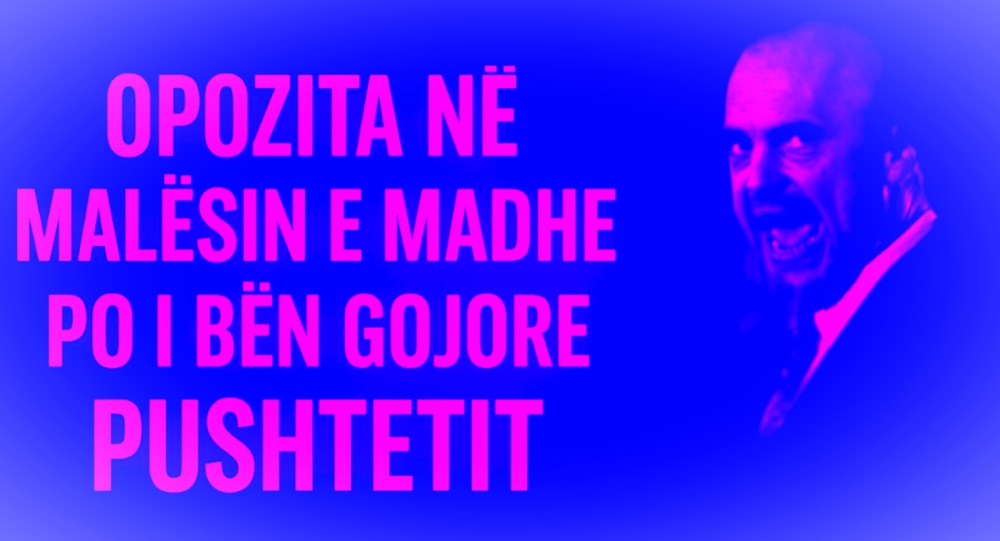
U.S. Ambassador Yuri Kim’s extreme partisanship included “literally and figuratively embracing Rama, openly favoring Rama and belittling the Democratic Party and the opposition, famously telling Berisha to ‘eat grass.”46
Soros Network Connections
Recent media reports documented Rama’s attendance at Alex Soros’s wedding to Uma Abedin, highlighting the close personal relationships between the Albanian Prime Minister and influential progressive networks. These connections raise questions about whether the designation of Berisha-Rama’s primary political opponent was influenced by ideological allies rather than objective assessment of corruption evidence.
Congressional Concerns
As noted, eight U.S. Senators, including Marco Rubio, wrote to President Biden expressing “deep concerns with your administration’s misuse of authorities provided by Congress to combat corruption at the expense of strategic U.S. national security interests. “49 They noted that the overwhelming majority of public designations made under Section 7031(c) have targeted “that have cooperated with the United States on strategic diplomatic and national security interests”50 while the administration “has ignored well-documented cases of significant corruption by foreign government officials actively undermining U.S. national security interests.”51
- THE DESIGNATION HAS BACKFIRED AND DAMAGED U.S. FOREIGN POLICY INTERESTS
Damaged Bilateral Relations
The designation betrayed “one of the most pro-American peoples”52 in the world. “Albania may be small, but Albanians are one of the most pro-American peoples. The United States should not betray them. “53
Albania “votes with the United States at the United Nations as much as Australia does, and even more than erstwhile allies like the Netherlands, Spain, or Sweden.”54
Criminal Infiltration
Criminal organizations directly controlled the electoral process, with “elections in 10 out of 12 Albania’s electoral districts and 21 out of 61 municipalities overtaken by the country’s most dangerous criminal gangs. “67 These “criminal networks operated under direct coordination from the Prime Minister’s Office. “68
International observers documented “links between political parties and organized crime in some areas, with organized crime groups intimidating and threatening voters and, at times, candidates.”69
State Capture
The OSCE/ODIHR report confirmed that “the ruling party benefitted from the widespread use of administrative resources and institutional leverage”70 and that “the playing field was uneven, “71 with systematic “pressure on public employees, cases of intimidation of opposition supporters and the misuse of patronage networks. “72
Regional Security Implications
Albania’s deterioration has broader implications for regional stability. The country’s transformation into a narco-state threatens the security of NATO allies and EU partners. Criminal networks operating from Albania now pose a direct threat to European security, while the country’s democratic backsliding undermines the credibility of Western institutions in the region.
The designation achieved the opposite of its stated goals: instead of promoting accountability and democratic governance, it has enabled the rise of an increasingly authoritarian and corrupt regime that threatens both Albanian democracy and regional security interests.
- HISTORICAL DEMOCRATIC CREDENTIALS
Historical Democratic Credentials
Berisha led Albania’s transition from communist dictatorship to democracy, founding “the Democratic Party of Albania, an unabashedly center-right party. “73 He “privatized both land and homes [reduced] inflation to the single digits… [and]…allowed religion to again flourish after decades of Communist repression.”74
Crucially, when his party lost elections in 1997, “Berisha gracefully transitioned into leader of the opposition,” demonstrating his commitment to democratic norms. 75
Berisha remains the popular leader of the main opposition party in Albania and returning the United States to a neutral role in Albania’s internal political affairs will be difficult so long as the designation remains.
- LIFTING THE DESIGNATION WOULD RESTORE POLICY NEUTRALITY
Current Policy Imbalance
The current approach represents dangerous partisanship where “the State Department uses dirty tricks to put its finger on the scale, “76 betraying democracy by picking sides.
Compelling National Interest
The case for removal is “strong for reasons that are self-evident: He is a staunch American ally whose inclusion on the list was entirely politically motivated by the previous administration. The imminent Albanian election and the need for President Berisha to campaign among the Albanian-American diaspora form a ‘compelling national interest’ that warrants quick, decisive action by the Secretary. “77
- CONSISTENCY WITH SECRETARY RUBIO’S STATED POSITIONS AND TRUMP ADMINISTRATION REFORMS
Opposition to Politicized Sanctions
As a Senator, Marco Rubio was among eight senators who criticized the Biden administration’s “misuse of authorities provided by Congress to combat corruption” and expressed concern about the “politicized sanctions process. “78 They specifically noted that the administration had “ignored well-documented cases of significant corruption by foreign government officials actively undermining U.S. national security interests and supporting U.S. adversaries. “79
Policy experts have noted that “Blinken’s sanctions against Berisha were as politically driven and mendacious as his lifting of sanctions against the Houthis, “80 and that “Secretary of State Marco Rubio should recognize that Rama’s goals in throwing legal challenges at Berisha have less to do with clean government and more with delivering a knock-out blow to the 80-year-old Berisha. “81
Alignment with Trump Administration Anti-Lawfare Agenda
Lifting the Berisha designation would be consistent with President Trump’s stated goal of reversing the weaponization of government institutions that occurred under his predecessor. The designation represents a clear example of how foreign policy tools were used to advance ideological objectives rather than legitimate anti-corruption efforts.
Breaking State Department-NGO Collusion
The Berisha case exemplifies the problematic relationship between left-leaning career State Department bureaucrats and progressive NGOs that Secretary Rubio committed to reforming. The close connections between Rama and the Soros network, including Rama’s attendance at Alex Soros’s wedding, illustrate how these relationships can compromise objective policymaking.
Secretary Rubio’s reform agenda includes breaking this collusion and ensuring that foreign policy decisions are based on American national interests rather than the preferences of progressive advocacy networks. Lifting the Berisha designation would send a clear signal that the State Department will no longer serve as an instrument for advancing partisan political agendas abroad.
KEY SUPPORTING EVIDENCE
European Parliament Condemns Albanian Government’s Authoritarian Drift
The European Parliament’s July 2025 resolution on Albania provides damning evidence of the country’s democratic deterioration under the current government. The resolution, adopted by 438 Members of the European Parliament, “strongly regrets that the political climate remains highly polarised,” warns of the “lack of independence of key democratic institutions,” and “expresses concern about the continued vulnerability of state institutions to undue influence. “45
European parliamentarians documented systematic abuse by the ruling party:
Judicial Manipulation: MEP Frédéric Beleri, himself imprisoned during the
campaign, condemned “the much-discussed judicial reform has failed due to the constant interference of the Albanian government… Observers from the OSCE and the EU point to political pressure on voters, manipulation of the media, interference of organized crime in the electoral process, and suspicious sources of funding. “46
Criminal-State Nexus: MEP Alexander Sell issued a stark warning: “The
Albanian mafia controls the cocaine and marijuana trade in Europe with extreme brutality… Experts call Albania the Colombia of Europe. “47
Systematic Corruption: MEP Aleksandar Nikolic questioned continued EU
support: “Since 2007, over €2 billion have been given to Albania. And for what result? The country remains plagued by corruption, its press is gagged, and it is a hub for organized crime. “48
The resolution highlights “limited progress in the fight against corruption and organised crime,” including “the presence of criminal actors in key sectors of the economy” and criticizes “shortcomings related to voter pressure, vote-buying, and misuse of state resources. “49
OSCE/ODIHR Findings on Electoral Violations
The international election observation mission found numerous serious violations:
Intimidation and Pressure: “Candidates were generally able to campaign freely
although some reported facing intimidation” and “there were numerous allegations of pressure on voters, especially public employees. “82
State-Party Fusion: “The wide use of such public activities for electoral purposes further reinforced the ruling party’s undue advantage, and blurred the
line between the state and party, contrary to paragraph 5.4 of the 1990 OSCE Copenhagen Document. “83
Criminal Influence: “Links between political parties and organized crime in some areas, with organized crime groups intimidating and threatening voters and, at times, candidates. “84
Media Control: “Concentration of media ownership undermining the plurality of news sources, along with self-censorship among journalists. “85
Congressional Oversight
Republican Senators, including current Secretary of State Marco Rubio, formally expressed concerns about the politicization of 7031(c) designations, writing: “We are deeply troubled by why your administration appears to have politicized the sanctions process to target certain U.S. partners and undermine U.S. national and regional security while refusing to sanction egregious actions in the region by others. “86
Growing International Concern About Albanian Democracy
The European Parliament’s resolution reflects “growing fatigue with symbolic reforms and worsening trust in Albania’s democratic credibility. “87 As French MEP Angéline Furet stated: “Let’s stop funding the illusion. Let’s stop funding corruption and contempt for democracy. Before enlargement, let’s demand transparency and results. “88
The resolution warns of “backsliding in fundamental rights and rule of law” and urges the government to “depoliticise public institutions” and “foster a democratic political
culture. “89 It specifically references “systemic rights violations” and calls for respect for minority rights, noting that “many unresolved property claims remain. “90
Evidence of Corruption Under Current Leadership
Multiple sources document how corruption has worsened under Prime Minister Rama:
Vote Buying: “The government distributed €100 bonuses to approximately 760,000 pensioners, totaling over €70 million from the state budget – a blatant misuse of state funds for electoral purposes. “91
Patronage Networks: “Each Public servant had the obligation to ensure 20 votes in the country and diaspora and present the contact numbers of those voters as well the picture of the vote on the day of the election.”92
Criminal Coordination: “The criminal networks operated under direct coordination from the Prime Minister’s Office, with Ergys Agasi, one of Rama’s closest confidants, acting as the national coordinator of these criminal structures. “93
RECOMMENDATION
The Secretary of State should immediately lift the 7031(c) designation of Sali Berisha based on:
- Lack of factual basis: The designation was politically motivated without substantial evidence
Changed circumstances: Albania’s democratic deterioration under current leadership demonstrates the designation’s counterproductive effects
- Compelling national interest: Restoring U.S. credibility and neutrality in Albanian politics serves strategic interests
- Consistency with policy principles: Aligns with Secretary Rubio’s stated
opposition to politicized sanctions
- Trump administration reform agenda: Supports efforts to reverse weaponization of government institutions
- Breaking State Department-NGO collusion: Demonstrates commitment to
objective policymaking free from progressive advocacy network influence
As the legal memorandum concludes, “His only remaining means of redress lie with the Secretary, “94 making this decision both legally straightforward and strategically imperative.
The designation has failed to achieve its stated anti-corruption goals while actively harming U.S. interests and Albania’s democratic development. More troubling, it appears to have been influenced by ideological considerations, personal relationships between Albanian leadership, and progressive networks rather than objective assessment of evidence.
As a Biden administration official has acknowledged, the designation was based on “rumors” rather than concrete evidence, and the system itself has “many flaws.” Meanwhile, the European Parliament has documented Albania’s systematic transformation into an increasingly authoritarian state under the current government- the very outcome the designation was supposed to prevent. 95
Lifting the designation would represent a return to principled, neutral foreign policy that serves America’s long-term strategic interests in the Balkans while demonstrating the Trump administration’s commitment to ending the weaponization of government institutions for partisan purposes.
This briefing is based on extensive documentation from OSCE/ODIHR election observation reports, U.S. Congressional correspondence, policy analysis from the American Enterprise Institute, legal documentation regarding Section 7031(c) procedures, European Parliament resolutions and debates, Congressional Research Service analysis, and interviews with former U.S. diplomatic officials.
8 U.S.C. § 1182 n. Inadmissibility of Foreign Officials and Family Members Involved in Kleptocracy or Human Rights Violations
Pub. L. 118-47, div. F. title VII. §7031(c), Mar. 23, 2024, 138 Stat. 784, provided that:
“(1) Ineligibility.-
“(A) Officials of foreign governments and their immediate family members about whom the Secretary of State has credible information have been involved, directly or indirectly, in significant corruption, including corruption related to the extraction of natural resources, or a gross violation of human rights, including the wrongful detention of locally employed staff of a United States diplomatic mission or a United States citizen or national, shall be ineligible for entry into the United States.
“(B) Concurrent with the application of subparagraph (A), the Secretary shall, as appropriate, refer the matter to the Office of Foreign Assets Control, Department of the Treasury, to determine whether to apply sanctions authorities in accordance with United States law to block the transfer of property and interests in property, and all financial transactions, in the United States involving any person described in such subparagraph.
“(C) The Secretary shall also publicly or privately designate or identify the officials of foreign governments and their immediate family members about whom the Secretary has such credible information without regard to whether the individual has applied for a visa.
“(2) Exception.-Individuals shall not be ineligible for entry into the United States pursuant to paragraph (1) if such entry would further important United States law enforcement objectives or is necessary to permit the United States to fulfill its obligations under the United Nations Headquarters Agreement: Provided, That nothing in paragraph (1) shall be construed to derogate from United States Government obligations under applicable international agreements.
“(3) Waiver.-The Secretary may waive the application of paragraph (1) if the Secretary determines that the waiver would serve a compelling national interest or that the circumstances which caused the individual to be ineligible have changed sufficiently.
“(4) Report.-Not later than 30 days after the date of enactment of this Act [Mar. 23, 2024], and every 90 days thereafter until September 30, 2025, the Secretary of State shall submit a report, including a classified annex if necessary, to the appropriate congressional committees [Committees on Appropriations and Foreign Relations of the Senate and the Committees on Appropriations and Foreign Affairs of the House of Representatives] and the Committees on the Judiciary describing the information related to corruption or violation of human rights concerning each of the individuals found ineligible in the previous 12 months pursuant to
This material is distributed by Continental Strategy on behalf of the Democratic Party of Albania. Additional information is on file with the Department of Justice, Washington, D.C.
This is the last page.
paragraph (1)(A) as well as the individuals who the Secretary designated or identified pursuant to paragraph (1)(B), or who would be ineligible but for the application of paragraph (2), a list of any waivers provided under paragraph (3), and the justification for each waiver.
“(5) Posting of report.-Any unclassified portion of the report required under paragraph (4) shall be posted on the Department of State website.
“(6) Clarification.-For purposes of paragraphs (1), (4), and (5), the records of the Department of State and of diplomatic and consular offices of the United States pertaining to the issuance or refusal of visas or permits to enter the United States shall not be considered confidential.”
Similar provisions were contained in the following prior acts:
Pub. I. 117-328, div. K. title VII, §7031(c), Dec. 29, 2022, 136 Stat. 5026.
Pub. I. 117-103, div. K. title VII, $7031(c), Mar. 15, 2022, 136 Stat. 615.
Pub. L. 116-260, div. K, title VII, $7031(c), Dec. 27, 2020, 134 Stat. 1743.
Pub. L. 116-94, div. G, title VII, §7031(c), Dec. 20, 2019, 133 Stat. 2865.
Pub. L. 116-6, div. F, title VII, §7031(c), Feb. 15, 2019, 133 Stat. 319.
Pub. L. 115-141, div. K, title VII, §7031(c), Mar. 23, 2018, 132 Stat. 884.
Pub. L., 115-31, div, J, title VII, $7031(c), May 5, 2017, 131 Stat. 640.
Pub. L. 114-113, div. K, title VII, §7031(c). Dec. 18, 2015, 129 Stat. 2755.
Pub. L. 113-235, div. J, title VII. §7031(c). Dec. 16, 2014, 128 Stat. 2620.
Pub. L. 113-76, div. K. title VII, §7031(c), Jan. 17, 2014, 128 Stat. 511.
Pub. L. 112-74, div. I, title VII, §7031(c), Dec. 23, 2011, 125 Stat, 1211.
Pub. L. 111-117, div. F, title VII, 87084, Dec. 16, 2009, 123 Stat. 3400.
Pub. L. 111-8, div. H. title VII, $7086, Mar. 11, 2009, 123 Stat. 912.
Pub. L… 110-161, div. J, title VI. $6991, Dec. 26. 2007, 121 Stat. 2373.
This material is distributed by Continental Strategy on behalf of the Democratic Party of Albania. Additional information is on file with the Department of Justice, Washington, D.C.
Received by NSD/FARA Registration Unit 07/24/2025 4:24:08 PM
















 AL in Sweden.