“Kjo është një ditë e mirë, në një moment kritik për sigurinë tonë. Faleminderit shumë për dorëzimin e aplikacioneve për anëtarësimin e Finlandës dhe Suedisë në NATO.
Çdo komb ka të drejtë të zgjedhë rrugën e tij.
Ju të dy e keni bërë zgjedhjen tuaj, pas proceseve të thella demokratike. Dhe unë mirëpres ngrohtësisht kërkesat e Finlandës dhe Suedisë për t’u anëtarësuar në NATO.
Ju jeni partnerët tanë më të afërt.
Dhe anëtarësimi juaj në NATO do të rriste sigurinë tonë të përbashkët”, tha Sekretari i Përgjithshëm i NATO-s Jens Stoltenberg më 18 maj 2022.
Ai sapo kishte marrë aplikimet për anëtarësim të Finlandës dhe Suedisë, të paraqitura nga përfaqësuesit e të dy vendeve në NATO, Klaus Korhonen dhe Axel Wernhoff. të cilët, për nder të ditës historike, kanë veshur këmisha dhe kravata në ngjyrat e vendit të tyre përkatës.
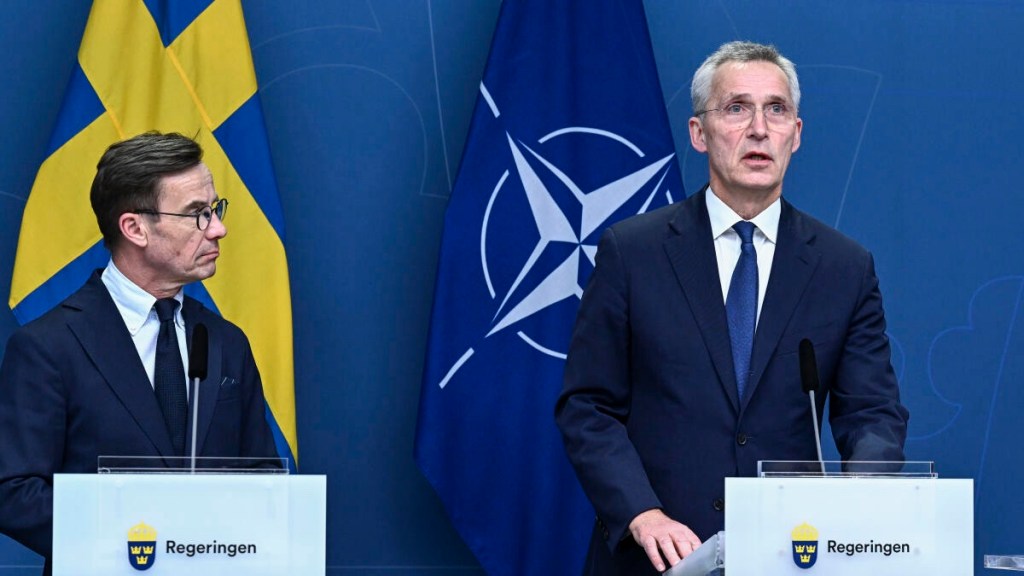
Megjithatë, edhe pse diplomatët e të dy vendeve mendonin se kishin bërë detyrat e shtëpisë dhe kishin siguruar pëlqimin e të gjithë anëtarëve të NATO-s për pranimin e tyre, Turqia u largua, me Hungarinë si krahun e saj.

Në verën e vitit 2023, dy kryeqytetet e lanë Finlandën të kalonte, por mishi i Turqisë nuk ishte kurrë me Finlandën në radhë të parë.

Ishte me Suedinë, veçanërisht fakti që vendi u ka dhënë prej kohësh azil kurdëve.
Pas një "Memorandumi Trepalësh" të qershorit 2022 midis Suedisë, Finlandës dhe Turqisë për këtë çështje, në korrik 2023 Suedia dhe Turqia ranë dakord të vazhdonin zbatimin e detyrimeve të memorandumit, gjë që më së shumti nënkuptonte se Suedia do të ndihmonte Turqinë në luftën kundër terrorizmit kurd.

”Suedia do të paraqesë një udhërrëfyes si bazë e luftës së saj të vazhdueshme kundër terrorizmit në të gjitha format dhe manifestimet e tij drejt zbatimit të plotë të të gjitha elementeve të Memorandumit Trepalësh", shpjegoi selia e NATO-s pas takimit të 10 korrikut midis Presidentit Recep Tayyip Erdoǧan dhe Kryeministrit Ulf Kristersson.

Në këmbim, Erdoǧan premtoi ratifikimin turk.

Nuk ishte vetëm pushtimi i Ukrainës: ishte gjithashtu përplasja në rritje midis Kinës dhe Perëndimit, ngacmimi i palëve përkatëse për miq dhe partnerë të rinj, dhe më pas sigurisht konflikti Izrael-Gaza.
Erdoǧan, i cili rivendosi marrëdhëniet diplomatike të Turqisë me Izraelin në vitin 2022, ka reaguar ashpër ndaj viktimave të rënda civile të shkaktuara nga bombardimet e Izraelit në enklavë. Në të vërtetë, konflikti duket se ka përmbysur në mënyrë dramatike përmirësimet e fundit në marrëdhëniet izraelito-turke.
Në mënyrë të pashmangshme, oferta e Suedisë për NATO-n tani po tërhiqet në këtë çështje krejtësisht të palidhur. “Dëshirojmë t’i kujtojmë kujtdo që pret anëtarësimin e Suedisë për përgjegjësitë e tyre më të ngutshme lidhur me konfliktin në Palestinë”, tha në fillim të këtij muaji Devlet Bahçeli, kreu i Partisë Lëvizja Nacionaliste, nga mbështetja parlamentare e së cilës varet partia AKP e Erdoğan. Partia e tij, shtoi Bahçeli, do të votojë për ratifikimin e anëtarësimit të Suedisë në NATO nëse aleanca njeh një shtet të pavarur palestinez dhe Izraeli paguan reparacione.
Oferta në fakt është bërë peng i një shkrirjeje globale dhe pavarësisht se çfarë i premton Suedia Turqisë apo Hungarisë, ka të ngjarë të shfaqen ankesa të ndryshme globale, për të cilat oferta e Suedisë në NATO mund të shërbejë si një levë e përshtatshme.

Në të vërtetë, përvoja zhgënjyese e anëtarësimit të Suedisë në NATO duhet të shërbejë si një paralajmërim për vendet e tjera. Çdo iniciativë e madhe politike e paraqitur nga çdo komb sot rrezikon të bëhet një rrufe për ankesat e vendeve të tjera, pavarësisht nëse këto ankesa kanë ndonjë lidhje me nismën e politikave.
Në këtë sfond, është një mrekulli që COP28 përfundoi me një marrëveshje mbi nevojën për të hequr gradualisht karburantet fosile.
Përsëri, ballafaqimi me ndryshimet klimatike është në interesin e të gjithëve.
How Sweden’s NATO bid became a geopolitical bargaining chip

ELISABETH BRAW
THEMES: GEOPOLITICS, NATO, SWEDEN
Sweden’s frustrating NATO accession experience should serve as a warning to other countries that any major international initiative risks becoming a lightning rod for other nations' grievances.

Sweden’s NATO application was meant to be so straightforward. Few countries have ever been so suitable, militarily and politically, for membership in the alliance. Sweden also had impeccable timing, with Russia so bogged down in its war against Ukraine that it would be unlikely to carry out its long-signalled threats of ‘serious consequences’ if Sweden applied for NATO membership. The world, alas, was turning more combative. In the nearly two years since Sweden submitted its membership bid, it has become the depository of all manner of political grievances that bear little relation to Sweden. Get ready for more geopolitical hostage-taking.

‘This is a good day, at a critical moment for our security. Thank you so much for handing over the applications for Finland’s and Sweden’s membership in NATO. Every nation has the right to choose its own path. You have both made your choice, after thorough democratic processes. And I warmly welcome the requests by Finland and Sweden to join NATO. You are our closest partners. And your membership in NATO would increase our shared security,’ NATO Secretary-General Jens Stoltenberg said on 18 May 2022. He had just received Finland’s and Sweden’s membership applications, submitted by the two countries’ representatives to NATO, Klaus Korhonen and Axel Wernhoff, who, in honour of the historic day, sported shirts and ties in their respective country’s colours.

However, even though the two countries’ diplomats thought they had done their homework and secured all NATO members’ consent for their accession, Turkey balked, with Hungary as its wingman. In the summer of 2023, the two capitals let Finland through, but Turkey’s beef was never with Finland in the first place. It was with Sweden, specifically the fact that the country has long granted asylum to Kurds.

Following a June 2022 ‘Trilateral Memorandum’ between Sweden, Finland and Turkey on the issue, in July 2023 Sweden and Turkey agreed to continue implementing the memorandum’s obligations, which mostly meant that Sweden would aid Turkey’s fight against Kurdish terrorism. ‘Sweden will present a roadmap as the basis of its continued fight against terrorism in all its forms and manifestations towards the full implementation of all elements of the Trilateral Memorandum’, NATO HQ explained after the 10 July meeting between President Recep Tayyip Erdoǧan and Prime Minister Ulf Kristersson. In return, Erdoǧan promised Turkish ratification. A few attention-seekers resident in Sweden, alas, saw an opportunity for to get their 15 minutes of fame by insulting Erdoǧan and burning the Koran, which caused rather overblown outbreaks of anger not just in Ankara but in various other Muslim capitals – and condemnation by the Organisation of Islamic Cooperation. Hungary, meanwhile, stepped out of the wingman shadow to declare that ratifying Sweden’s NATO accession was impossible so long as Swedish opposition politicians continued to criticise the state of democracy in Hungary.

The hurdles to Sweden’s accession were never really just about Kurdish terrorism. While the application was perfectly timed, it also arrived at a moment when the world was becoming a lot more contentious. It wasn’t just the invasion of Ukraine: it was also the intensifying standoff between China and the West, the respective sides’ jockeying for new friends and partners, and then of course the Israel-Gaza conflict. Erdoǧan, who re-established Turkey’s diplomatic relations with Israel in 2022, has reacted strongly to the heavy civilian casualties caused by Israel’s bombing of the enclave. Indeed, the conflict appears to have dramatically reversed recent improvements in Israeli-Turkish relations.

Inevitably, Sweden’s NATO bid is now being drawn into this completely unrelated matter. ‘We would like to remind anyone waiting for Sweden’s membership of their more pressing responsibilities regarding the conflict in Palestine’, Devlet Bahçeli, the leader of the Nationalist Movement Party, on whose parliamentary support Erdoǧan’s AKP party depends, said earlier this month. His party, Bahçeli added, would vote to ratify Sweden’s NATO membership if the alliance recognises an independent Palestinian state and Israel pays reparations.

Peace in the Middle East clearly has no connection to Sweden’s NATO membership, but such is today’s global acrimony that all manner of grievances are being thrown at Sweden’s NATO application. The bid has, in fact, become hostage of a global meltdown, and no matter what Sweden promises Turkey or Hungary, various global grumbles are likely to emerge, for which Sweden’s NATO bid can serve as a convenient lever.

Indeed, Sweden’s frustrating NATO accession experience should serve as a warning to other countries. Any major policy initiative presented by any nation today risks becoming a lightning rod for other countries’ grievances, regardless of whether those grievances have any links to the policy initiative. Against this background, it’s a miracle that COP28 ended with agreement on the need to phase out fossil fuels. Then again, dealing with climate change is in everyone’s interest. But what happens when a policy initiative concerns something slightly less ambitious? The post-Cold War days of diplomatic goodwill are fading fast, and unfortunately, so are the days of good diplomatic manners.
AUTHOR
Elisabeth Braw
 AL in Sweden.